
What is an ad film brief?
An ad film brief is the working agreement between the brand, agency and production team about the problem the film must solve. It is not merely a mood board or list of shots. It connects a marketing objective to an audience, a message and the finished assets needed to run the campaign.
For example, “show our new product in a cinematic film” describes a visual ambition. “Help first-time buyers understand the product’s main benefit and visit the launch page” gives the creative team a decision to solve. Both can be in the brief, but the second tells the team what success looks like.
What should you put in the brief?
1. Campaign objective and desired action
State whether the ad is intended to build awareness, introduce a product, change a perception, generate enquiries or support sales. Then say what viewers should do or think after watching. One ad can have secondary benefits, but it needs a clear primary job.
2. Audience and viewing situation
Describe the target audience in useful terms: what they already know, what they doubt, what motivates them and where they are likely to see the ad. “Urban adults aged 25–44” is less actionable than “first-time home buyers comparing financing options on mobile.”
3. One message and its supporting proof
Write the one sentence a viewer should remember. Add the product features, demonstrations, customer evidence or approved claims that support it. If a claim depends on a test, certification or offer condition, identify the source and the person responsible for approving its use.
4. Tone and brand boundaries
Share the brand’s visual identity, voice, previous campaigns and examples that illustrate the intended feel. Mark non-negotiable elements separately: logo treatment, product depiction, mandatory text and prohibited portrayals. A reference video is useful when you explain what you like about it, not when the team is expected to copy it.
5. Media plan and formats
List the channels and placements: TV, YouTube, Instagram Reels, a website, cinema or in-store screens may demand different openings, aspect ratios, sound approaches and text sizes. Google Ads, for example, provides separate guidance for horizontal, vertical and square video assets and safe areas. Check the current platform specifications before locking delivery requirements. Google Ads video ad specifications.
This is an editorial planning point, not a request for the same widescreen film to be automatically cropped into every format. If mobile-first cuts matter, discuss separate framing or scenes with the team. Superfly’s vertical content service is relevant to that part of the brief.
6. Runtime and version plan
Specify the master film and any required cutdowns, hooks, end cards, language versions, captions or stills. If the paid media team expects to test two openings or calls to action, say so before shooting. A single shoot can support variants when the team knows what coverage to capture.
7. Budget range and production constraints
Share a realistic budget range rather than asking teams to guess. Identify fixed limits, such as a product launch date, availability of a celebrity or one permitted shoot location. Budget shapes casting, art direction, locations, crew, effects, post-production and the number of versions.
8. Assets, access and rights
List product samples, existing footage, brand files, locations, staff or spokespeople and any third-party material. Clarify who owns the rights to music, performances, footage and final files, which territories and media are covered, and whether raw footage or project files are part of the delivery.
9. Approval owners and review stages
Name one decision maker for consolidated feedback. Identify the stages requiring approval: concept, script, storyboard, casting, shoot plan, rough cut and final master. Include the brand, legal, product and media teams early enough that they do not introduce fundamental changes after the shoot.
10. Measurement and learning
Define how the brand will judge the campaign after launch. This might include recall research, qualified traffic, enquiries, sales lift or performance of creative variants. The production team does not control every media outcome, but a stated goal helps it make better creative choices.
A copyable ad film brief template
| Field | What to provide |
| Brand and product | What is being advertised? What must be shown accurately? |
| Objective | What should the ad achieve? |
| Audience | Who is it for, and what do they currently believe? |
| Core message | What is the one takeaway? |
| Proof | Which demonstrations or approved claims support it? |
| Placements | Where will the film appear? |
| Deliverables | Master, cutdowns, ratios, languages, captions and stills |
| Budget and dates | Range, launch date and fixed constraints |
| Mandatories | Brand, product, legal and accessibility requirements |
| Approvals | Decision maker and sign-off stages |
| Success measure | What will be reviewed after launch? |
Leave room below these fields for the production team’s response: its proposed insight, concept, visual approach, assumptions, open questions and estimated scope.
How should you review a production proposal?
Ask how the idea reaches the stated audience and makes the message memorable. A compelling treatment should explain its opening, product role, story progression and call to action. Review it against the brief, not only against its visual references.
Compare proposals on the same scope. Check what is included in pre-production, shoot days, cast, locations, edit rounds, sound, grade, graphics, deliverable versions and rights. The lowest quote may exclude a format or approval step that another includes.
A practical question for commercial ad film makers in Delhi is: “What would you change in this brief before you commit to the concept?” A good answer may expose a conflicting audience, an unsupported claim or a delivery requirement that needs a different shoot plan.
Which omissions cause trouble after the shoot?
- A late request for vertical edits when all important action was framed only for widescreen.
- A product claim that cannot be approved after the film has been shot around it.
- Several stakeholders giving contradictory feedback at final edit.
- A music or talent licence that does not cover the intended platforms or campaign duration.
- No agreed plan for subtitles, languages, accessibility or silent viewing.
- Unclear responsibility for supplying pack shots, supers, offer details or end cards.
The simplest prevention is a short pre-production sign-off: confirm the core message, script or storyboard, claim sources, placement list and delivery schedule before filming begins.
What should you send to ad film makers in Delhi?
Send the brief, brand assets, product information, media plan, reference films and any existing audience research. State what is decided and what is open for creative development. If several production teams are bidding, send them the same deliverables and assumptions so the proposals remain comparable.
An ad film production house in Delhi may develop TVCs, digital campaign films, product launch videos and platform-specific edits. Superfly’s ad film production page and commercial video production portfolio show the kinds of commercial work a brief can cover. For broadcast-specific production considerations, see the existing TVC production article.
Frequently asked questions
Do we need a script before contacting an ad film production house?
No. A clear objective, audience and message are enough to begin. The team can develop a concept and script from the brief, with your input and approval.
How long should an ad film brief be?
Long enough to answer the production decisions that matter. A concise two-page brief with useful attachments is usually better than a lengthy document that leaves the objective unclear.
Should the brief specify camera equipment?
Only when a technical constraint makes it necessary. Usually it is more useful to specify the intended result, placements, visual references and delivery requirements, then let the production team propose equipment.
Can one ad film work for TV and social media?
A campaign can share a core idea across both, but versions may need different framing, pacing, opening moments and calls to action. Plan those versions before the shoot.
How many revisions should we include?
Agree on review rounds and the type of changes covered at each stage. Major changes to an approved script after filming are different from normal editing feedback.
What if we have several audiences?
Prioritise the main audience for the master film, then decide whether other audiences need separate hooks, edits or entirely different messages. Do not make one short film carry several competing propositions.
A better shoot starts with a better decision
A good brief tells the team what the ad must achieve and gives it the freedom to find the most effective way to do so. Before commissioning a shoot, confirm the audience, message, proof, placements, deliverables, budget and decision makers. Those choices reduce avoidable revisions and make the creative proposal easier to assess.
If you are planning a campaign, share the brief with Superfly’s team to discuss the concept and the production scope.
Suggested visuals for publication
- A one-page ad film brief template graphic based on the table above.
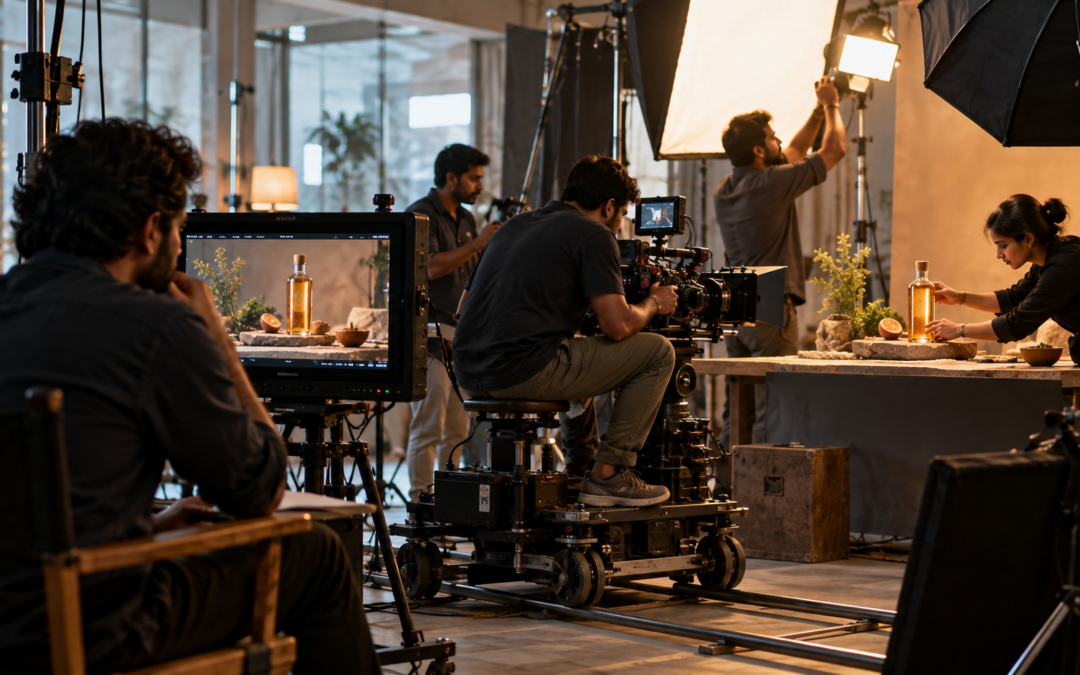
- An approved behind-the-scenes still from a Superfly commercial shoot, with a caption explaining the pre-production decision it illustrates.
- A storyboard-to-final-frame pair from an approved project.
- A horizontal and vertical framing comparison showing why placements belong in the brief.