
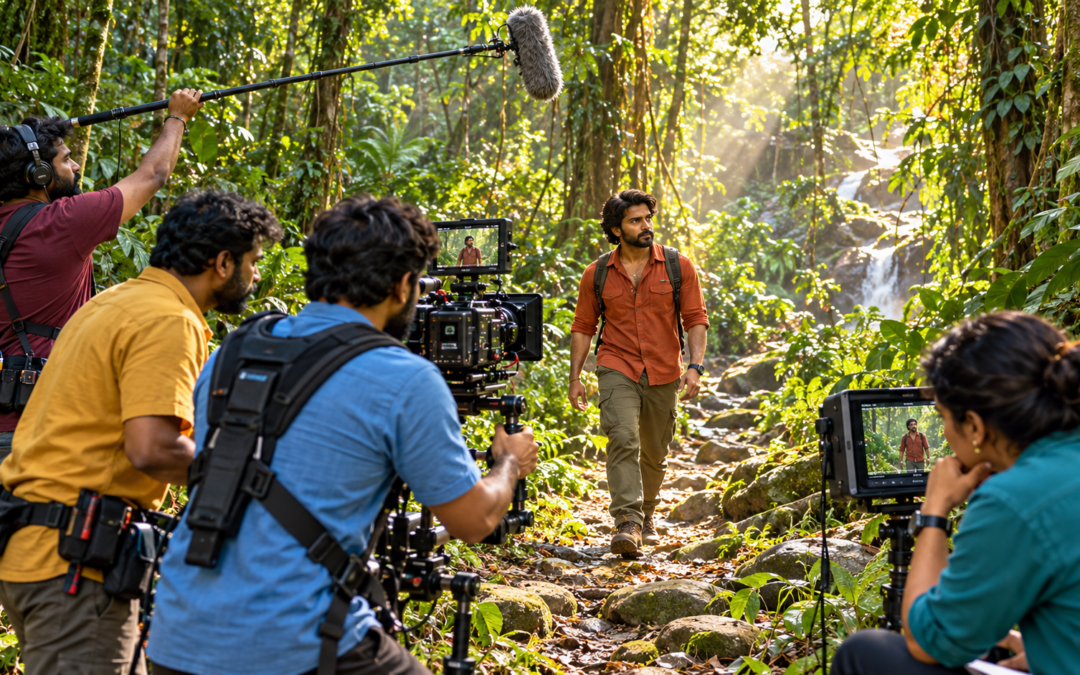
The cost of hiring a film production house in Delhi depends on the creative concept, shoot requirements, post-production and final deliverables. There is no single price that fits every project. For an accurate budget, request a tailored quotation based on your brief, intended audience and required outputs.
If you have received two very different quotes for the same video length, the difference may be in what each team plans to deliver. One might cover filming and basic editing; another might include concept development, scripting, casting, production management and several campaign versions.
For marketing teams and business owners, the useful question is: what does this budget need to achieve, and what scope will support that outcome?
Contents
- How to establish a realistic production budget
- What a production quotation should cover
- Why costs change between projects
- How to compare proposals and control additional charges
- Budget planning, measurement and frequently asked questions
Key takeaways
- A shoot-day rate and a complete film budget cover different responsibilities.
- Final video length alone is a poor basis for comparing prices.
- Define locations, shoot days, creative work and deliverables before requesting quotes.
- Confirm revisions, usage, taxes and exclusions in writing.
- Plan the main film and supporting campaign assets together.
Problem: Headline prices make proposals look comparable even when the scope, responsibilities and deliverables differ.
Opportunity: A clear brief lets a production partner explain where the money goes and offer options that meet your priorities.
Promise: This article will help you assess a quotation and choose a sensible production scope.
Executive summary: Set a working budget around the communication objective, then compare proposals using the same assumptions. Approve the scope, delivery schedule and process for additional costs before filming begins.
What budget should you expect for film production in Delhi?
There is no single standard fee for hiring a film production house. For this article, the focus is business content-corporate films, brand films, commercials and related videos-rather than feature-film financing.
Start by defining what your film needs to achieve and the work required to deliver it. A useful quotation should connect the proposed concept with the crew, filming schedule, finishing and versions your campaign needs.
Use the following scope comparison to frame an enquiry:
| Production scope | What you may be commissioning | What to establish first |
| Contained shoot | An interview or simple demonstration | Filming hours, crew and editing included |
| Developed corporate film | A scripted company or capability story | Creative work, locations and shoot days |
| Commercial or brand film | A directed concept with planned scenes | Casting, art direction and finishing |
| Multi-asset campaign | A main film and supporting versions | Asset count, languages and formats |
These examples illustrate why a useful budget discussion starts with scope. A straightforward interview at your office and a cast-led commercial are different productions even if both finished videos run for one minute.
For a project-specific estimate, share your brief with Superfly and ask for a proposal that clearly sets out the scope, inclusions, exclusions and optional additions.
What are you paying a film production house to do?
A film production house plans, organises, films and finishes video content. Its fee may cover the complete process or only selected stages, depending on the agreement.
When comparing a video production company in Delhi with a filming-only team, check who owns each responsibility. If scripting, coordination and editing are excluded, your team will need to manage or commission them separately.
For a first-time commission, this introduction to how video production works explains the main stages.
What should the quotation include?
| Cost category | Typical scope to clarify | Useful question |
| Creative development | Research, concept, script and storyboard | How many concepts and approval rounds? |
| Pre-production | Scheduling, scouting, casting and permissions | Who organises and pays for each item? |
| Production | Director, crew, cameras, lighting and sound | How many days and working hours? |
| Post-production | Editing, colour, audio and graphics | What finishing work is included? |
| Delivery | Main master, cutdowns and language versions | How many files and formats? |
| Production management | Coordination and supplier management | Is the fee included or shown separately? |
Some proposals combine these costs into a project fee. That can be workable if the scope remains clear; a long equipment list alone does not explain what the finished film will communicate.
Which factors increase or reduce the cost?
The concept and level of preparation
An interview-led film may use real employees and an existing workplace. A narrative commercial may require actors, rehearsals, props and a designed environment.
Neither approach is automatically better. Choose according to the audience, message and intended use. Explore corporate video production for company communication and commercial video production for advertising-led work before deciding the scope.
Shoot days and locations
The number of locations affects travel, setup time, lighting and coordination. Several short scenes across Delhi, Gurugram and Noida can require more time than a longer film shot in one controlled location.
Ask how many usable filming hours the schedule assumes. Site access, security checks, equipment loading and the availability of interviewees all affect what the crew can complete.
Crew and equipment
The team should match the work. A product demonstration may need careful lighting; an interview needs clear sound; a complex moving scene may require additional camera support and crew.
Ask why each specialist or equipment item is needed. Cutting a role without understanding its purpose can transfer work to another person or reduce the quality of the essential footage.
Talent and production design
Actors, presenters, voice artists, styling, sets and props can change the budget considerably. Confirm what the talent fee covers, including the intended platforms and duration of use where relevant.
When real employees appear, allow time for preparation and approvals. Their availability should be part of the schedule rather than assumed.
Editing and finishing
Post-production can include story editing, colour grading, sound work, graphics, subtitles and multiple versions. A project with extensive animation needs a different estimate from a film with simple titles.
For animation and explainer production, clarify design style, scene complexity and approval stages. If terms are unclear, this article on motion graphics and animation helps distinguish the work involved.
Timeline and approvals
A compressed deadline may require additional resources or parallel work. Late feedback can also affect the delivery plan, particularly when approved scenes or graphics need to change.
Ask for a schedule showing client approvals as well as production milestones. Confirm whether any rush charges apply before accepting the proposal.
Does a shorter video always cost less?
No. A short commercial can involve more planning and production than a longer interview.
Consider a hypothetical comparison: a three-minute founder interview in one office versus a thirty-second advert featuring several locations, actors and product close-ups. The advert may require more setups, coordination and finishing despite its shorter running time.
Use duration to define the deliverable, then ask the production team to explain the work required to create it. A price-per-minute comparison is useful only when the production style and scope are genuinely similar.
What additional charges should you check?
Ask for written inclusions and exclusions covering:
- Travel, transport, accommodation and location hire.
- Access permissions, site coordination and any specialist filming requirements.
- Crew overtime, extra shoot days and rescheduling.
- Talent, voiceover, stock footage and music licensing.
- Additional graphics, subtitles, translations and language versions.
- Revision limits, reshoots and changes after approval.
- Raw footage, editable project files and archive access.
- Applicable taxes and payment milestones.
Clarify the difference between correcting a production error and changing the brief. Both may require work, but they should not automatically be treated the same way commercially.
For music, stock material and talent, confirm permitted usage in the agreement. A supplied asset should not be assumed to cover every platform, territory or future campaign.
How do you compare quotes from production houses in Delhi?
Send the same written brief to each shortlisted team. Then compare the assumptions behind the price rather than the total alone.
| Compare this | Establish the same basis |
| Creative scope | Research, script and storyboard responsibilities |
| Filming | Locations, days, hours and planned coverage |
| Team | Named production leads and relevant experience |
| Finishing | Editing, sound, colour and graphics |
| Deliverables | Number, length, language and aspect ratio |
| Commercial terms | Revisions, usage, exclusions and payment stages |
A lower quote may suit a simpler assignment. A higher quote should explain the additional work and why it matters. Ask both teams to identify what would change if the budget were reduced.
When assessing a video production house in Delhi, watch complete projects relevant to your intended format. Superfly’s corporate portfolio includes work listed for SAXO Group and Honda India Power Products. Use published films to discuss creative approach and production requirements; a portfolio listing does not establish the budget or business results behind a project.
How can you reduce costs without weakening the film?
Simplify the scope before removing essential execution work. One well-chosen location may serve the idea better than three locations with insufficient filming time.
Prepare interviewees, products, rooms and brand materials before the shoot. Consolidate feedback through one decision maker so the editor receives a clear direction.
Plan related assets together. If you need a main film, product clips and vertical social content, list them before the shot plan is approved. Their framing and coverage requirements may differ.
Other options include editing suitable existing footage, filming a contained testimonial or using animation for material that is difficult to capture. A research-led documentary approach may suit a real story, but it should not be assumed to be cheaper: access, interviews and story development still require work.
A useful budgeting principle: Decide which outputs must be filmed specifically and which can be adapted from the same footage. More exported files do not necessarily mean more useful content; each version needs a clear purpose and sufficient coverage.
How should you plan the total project budget?
Separate the production fee from the complete cost of using the film. Your budget may also need to cover internal preparation, distribution, paid promotion and approved changes.
A practical sequence is:
- Define the audience, business objective and intended action.
- Choose the main film format and supporting assets.
- Share a working budget range, references and delivery date.
- Ask for a core proposal and any optional upgrades separately.
- Resolve exclusions, usage and approval responsibilities.
- Set an agreed allowance for identified uncertainties.
- Approve changes in writing before additional work begins.
There is no need to apply an arbitrary contingency percentage to every project. Ask what could change, how much exposure it creates and how that risk will be managed.
A video production agency in Delhi should be able to explain these trade-offs in plain language. That discussion helps you choose a scope your team can approve and use.
How do you judge whether the spend was worthwhile?
Choose measures before production. A sales film might support qualified enquiries or sales conversations; a training film might support understanding and completion; an advert might be assessed against campaign outcomes.
Coordinate production with the social media marketing plan or other distribution activity. A finished film needs a route to its audience, and media spend should be agreed separately where it is outside production scope.
Review usable assets, audience response and business outcomes alongside cost. Avoid attributing every sale after launch to the film; results also depend on targeting, the offer and follow-up.