
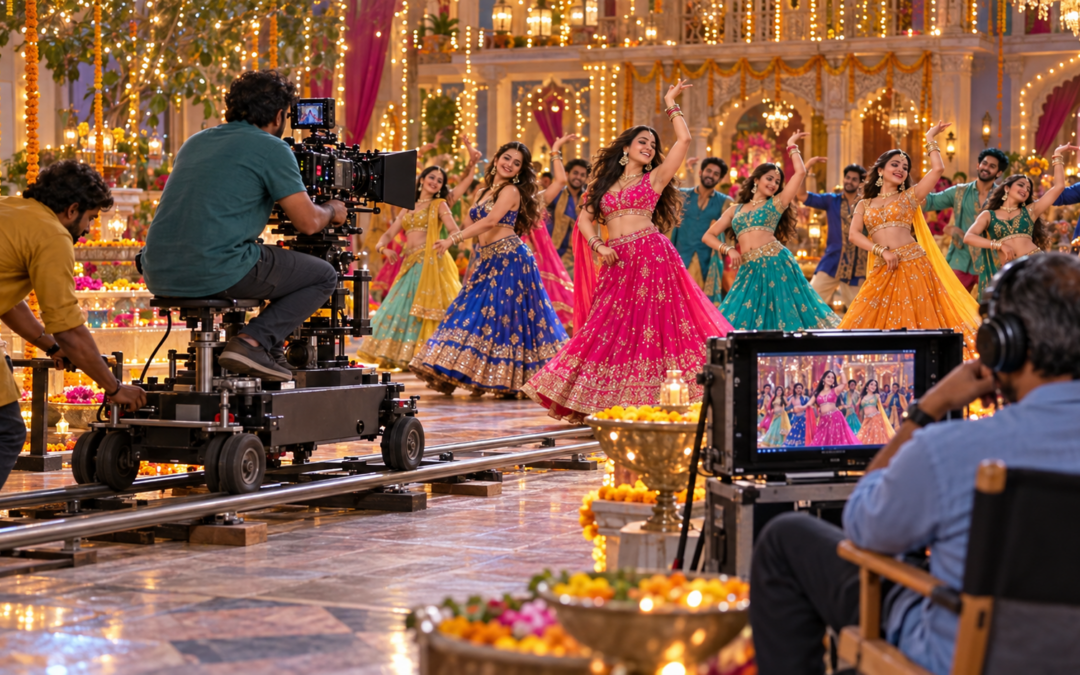
Choose a music video production company that understands your song, can demonstrate relevant finished work and provides a clear plan for your budget. Before booking, agree on the concept, production responsibilities, editing process, delivery schedule and usage terms. A strong partner should explain how each creative decision supports the artist and the release.
A striking showreel can get your attention. It cannot tell you whether the team will direct your performance well, manage a difficult location or deliver the edits you need before launch.
For artists, managers and labels, the hiring decision is about creative compatibility and dependable execution. This article explains how to compare music video makers and choose a team whose proposal you can evaluate before the shoot.
What does a music video production company do?
A music video production company plans, films and finishes visual content built around a song and its artist. Music video production services can include concept development, directing, production management, cinematography, art direction, editing, colour grading and agreed promotional versions.
The scope varies. Some teams manage the entire project; others provide filming or post-production only. Ask what is included rather than assuming that every service comes with the booking.
If you are commissioning your first film, this overview of how video production works explains the relationship between planning, shooting and post-production.
Does the team understand your song and artist identity?
Before discussing cameras, discuss the track. What emotion should the audience feel? What should they remember about the artist? Is the video introducing a new performer, developing an existing identity or supporting a specific release campaign?
A useful creative conversation connects lyrics, rhythm, performance and visual choices. Ask the director to explain why the proposed setting, lighting and pacing suit this particular song.
What should a treatment show?
A treatment is a written and visual proposal describing the intended music video. It should explain the idea, performance approach, visual references, principal scenes and how the film develops across the track.
Look for enough detail to assess the direction without expecting every shot to be finalised at the pitching stage. Ask which elements are essential and which can change if the budget or location changes.
A useful test is to ask: “If we removed the artist name and song title, could this proposal belong to almost any track?” If the answer is yes, request a more specific creative rationale.
An artist’s visual identity also benefits from consistency across releases. The principles in creating authentic and memorable brand videos can help frame that discussion without making every video look identical.
Which format fits your release?
| Format | Useful when | Planning consideration |
| Performance-led | The artist or choreography should lead | Rehearsals, direction and performance coverage |
| Narrative | The track supports a story or emotional journey | Casting, continuity and story clarity |
| Hybrid | You want both artist presence and a story | Time allocation between performance and narrative |
| Animation or mixed media | The concept needs illustration or an imagined world | Design approvals and post-production scope |
No format automatically produces a better result. Choose according to the song, audience and resources. For an illustrated approach, explore animation production and clarify how animation will interact with the music or filmed performance.
What should you check in the portfolio?
Watch two or three complete videos relevant to your proposed style. Notice whether the performance holds attention, the visual progression follows the track and the ending feels intentional.
Check lip-sync accuracy, lighting consistency, framing and editing rhythm. A fast montage can hide weak transitions or a concept that does not sustain a full song.
Ask what the company actually handled on each project. Producing the shoot, supplying a camera crew and editing footage are different contributions. Confirm whether the director and key crew behind the work you liked will be involved in your project.
For a real starting point, Superfly’s music video portfolio lists releases including “Fight Back India,” “Sulga Sulga Sa” and “Mawan te dhiyan ral bethiya.” Use published work to start a conversation about relevant creative choices and production responsibilities; the listing alone does not establish campaign performance.
What does “premier” tell you?
If a team describes itself as a premier music video production company, ask for evidence you can examine. Relevant complete projects, a clear treatment, identified production leads and a realistic schedule are more useful than the label itself.
Review the company’s background and team alongside its work. Experience across other formats can be useful, but it should support a clear explanation of how the team will handle your music video.
Which music video production services should be included?
Ask for a written scope covering preparation, filming, post-production and delivery. The same headline price can represent very different projects.
| Stage | Items to clarify | Approval needed |
| Development | Concept, treatment and visual references | Creative direction |
| Pre-production | Locations, casting, styling and shoot plan | Final production scope |
| Filming | Crew, equipment, performance direction and backups | Agreed shot priorities |
| Post-production | Editing, grading, graphics and revisions | Picture and final finish |
| Delivery | Main master, promotional versions and file formats | Final deliverable checklist |
Discuss styling and performance preparation early. Rehearsal time can be especially important for choreography, instrument performance and artists who are unfamiliar with filming.
If visual effects or animated titles are part of the concept, define their extent. This explanation of motion graphics and animation helps distinguish different post-production requirements.
How should you compare music video budgets?
There is no useful universal price without a defined concept. Costs depend on shoot days, locations, cast, crew, equipment, production design, travel and post-production complexity.
Send shortlisted companies the same brief and ask for itemised proposals. Confirm applicable taxes, location charges, overtime, transport, additional edits and any exclusions. Ask what happens if the creative scope changes after approval.
A less expensive proposal may be sensible for a contained performance shoot. It becomes harder to compare when another proposal includes casting, choreography, multiple locations and promotional versions.
Where should you prioritise spending?
Identify the moments that carry the video. A performance-led track may need more rehearsal and lighting preparation; a narrative may need more attention to casting and continuity.
Ask the team to offer a simpler version of the same idea. Removing a location or secondary storyline can protect time for the central performance. This is a stronger budgeting conversation than requesting the same scope at a lower price.
If sponsorship or product placement is involved, clarify how it affects the concept and approvals. Experience in commercial video production may be relevant when artist expression must coexist with brand requirements.
How can you tell whether the production process is reliable?
A credible process makes responsibilities visible. You should know who directs the film, who coordinates the production and who gathers approvals from the artist or label.
Agree on these stages before confirming dates:
- Share the final track, release objective, budget range and references.
- Approve the treatment and production scope.
- Confirm locations, cast, styling, rehearsals and filming priorities.
- Shoot against an agreed schedule, with time for essential coverage.
- Review the rough cut through one consolidated feedback channel.
- Approve the edit, colour and agreed graphics before final delivery.
Work backwards from the intended release date. Allow for feedback, finishing and upload checks rather than treating the shoot date as the main deadline.
For outdoor or multi-location shoots in Delhi NCR, ask about access, travel time, noise, weather alternatives and setup restrictions. The proposal should show how the team will protect the essential scenes if conditions change.
What should you agree about revisions and usage?
Confirm how many revision rounds are included and what counts as a revision. Changing a caption differs from replacing an approved storyline or requesting a new shoot.
Document who approves the final cut and what feedback deadlines apply. Conflicting instructions from the artist, manager and label can slow editing even when the production team is ready to proceed.
Also agree on ownership or licensed usage of the finished film, access to raw footage, project files, archive duration and the production team’s portfolio use. Confirm responsibilities for music, performer, location and third-party material permissions. Resolve these terms in the project agreement rather than assuming they follow automatically from payment.
Will the video support the release beyond the main upload?
Ask what you will receive for promotion. A full-length video, vertical chorus clip, teaser, thumbnail image and behind-the-scenes edit are separate deliverables with separate preparation needs.
Plan framing for vertical content before filming. A wide shot with the artist at one edge may not crop well for a phone screen. Ask which moments will be captured specifically for promotional versions.
A practical perspective: Treat the final delivery list as a creative input. If a chorus clip is important to the release, its framing and performance coverage belong in the shoot plan. Adding it after editing may leave the team working with unsuitable footage.
Coordinate the deliverables with your social media marketing plan. Specify who handles publishing, captions, promotion and reporting; production does not automatically include distribution.
What should you measure after launch?
Choose measures that match your objective. Review audience retention and watch time for viewing behaviour, engagement for audience response, and tracked outbound clicks for visits to release or ticket pages.
YouTube’s audience retention guidance explains how dips and spikes can identify moments worth reviewing. A spike may reflect rewatching or confusion, so interpret the graph alongside the actual scene.
Separate paid exposure from organic response where reporting allows it. Views alone do not establish that a video generated streams, bookings or revenue. For a financial assessment, compare the complete production and promotion spend with attributable outcomes where those outcomes can be measured.
Do you need a full company or a smaller team?
| Option | Suitable scope | Responsibility to clarify |
| Full production company | Several production roles and coordinated delivery | Named leads and included services |
| Independent director with crew | A defined concept and manageable shoot | Who manages logistics and post-production |
| Filming or editing specialist | You already manage the other production stages | Handoffs and responsibility for the final result |
| Music video and showreel agency | A release film plus an artist presentation reel | Separate purpose and scope for each output |
When comparing a music video & showreel production agency, distinguish the two formats. A music video centres on a song; an artist showreel showcases selected performances or capabilities for a particular audience.
Specify who the showreel is for—booking agents, collaborators or other decision makers—and what footage is available. Do not assume that a compilation of music video shots will demonstrate live performance ability.
What mistakes should you avoid when hiring music video makers?
- Choosing from a showreel without watching complete projects.
- Approving references without discussing what they mean creatively.
- Comparing prices when the proposed scopes are different.
- Leaving promotional versions until after the main edit.
- Failing to identify the director and final decision maker.
- Accepting promises of guaranteed virality or commercial success.
Before appointing a team, ask for three things: relevant complete work, a song-specific proposal and a written scope. If one is missing, resolve it before paying a booking amount.
Frequently asked questions
What should I send a music video production company first?
Send the track, artist background, release objective, budget range, target delivery date and a few references. Explain what you like about each reference and any constraints the team should consider.
How do I know whether a director fits my music?
Watch complete work and ask the director to explain their approach to your song. Look for a connection between the proposed visuals, the track’s mood and the artist’s identity.
How much do music video production services cost?
Costs vary with the concept and production scope. Request an itemised quotation covering preparation, filming, editing, revisions and deliverables, with exclusions stated clearly.
How early should I book the production team?
Start once your track and release plans are sufficiently defined. Ask the company to build a schedule that includes development, preparation, filming, post-production and approval time before launch.
Can one shoot deliver a music video and social clips?
Yes, when both are planned into the scope. Confirm the clip lengths, aspect ratios, performance moments and editing requirements before filming.
Does a music video and showreel agency provide promotion too?
Not necessarily. Ask whether the proposal includes only production or also publishing, media planning and campaign reporting. Confirm each responsibility separately.
Choose a partner with a plan you can assess
Write a one-page brief, shortlist teams with relevant complete work and compare their proposals against the same requirements. Choose the partner who can explain how the concept, budget and delivery plan support your release.
To discuss a project with Superfly, share your track, references and release requirements. That gives the production conversation a useful starting point.